
The Little Red Rooster Summer Showcase is over for another year, with the Rooster Sessions making an epic return for 2025.
This exclusive programme of panel discussions brings together clients, media and industry experts, including our very own Tabitha Grove.
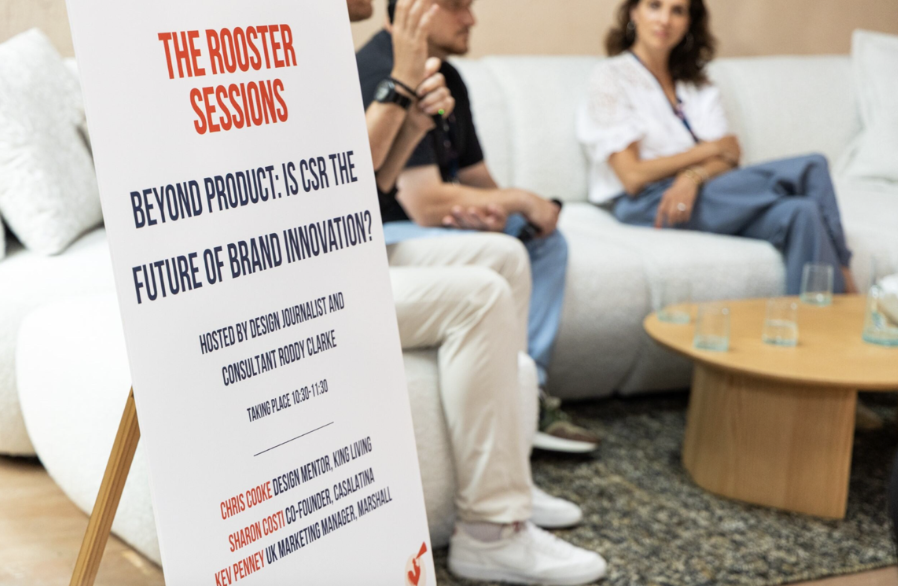
We kicked off this year’s programme with a big question: is CSR the Future of Brand Innovation?
Design journalist and consultant Roddy Clarke took to the stage as moderator. Drawing on his extensive knowledge of brands in the sustainability sector, he led a discussion packed with clear insights and bold ideas.
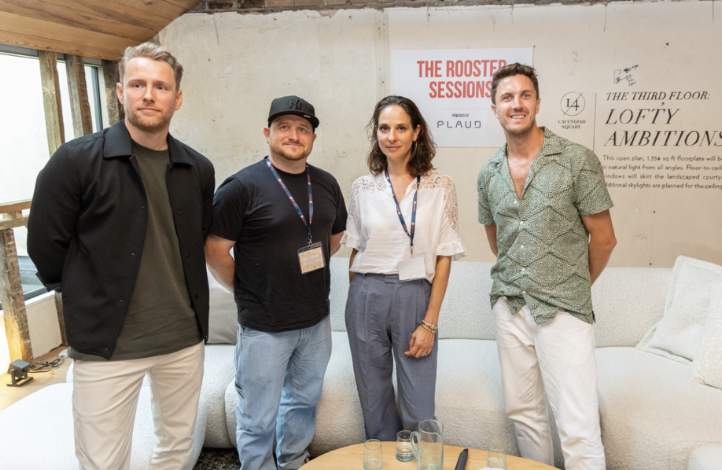
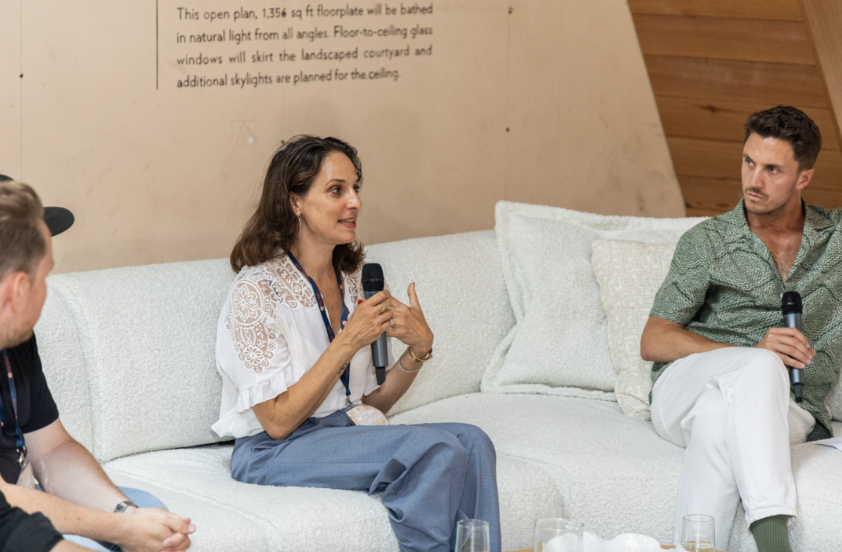
Joining Clarke on the sofa were Chris Cooke, the newly appointed Design Mentor at Australian furniture icon King Living; Sharon Costi, co-founder of artisan tableware brand CasaLatina; and Kev Penney, UK Marketing Manager for British music legend Marshall.
Each shared how their brand approaches CSR and the role those values play in the wider business.
CSR and brand innovation start with community
One of the biggest themes to emerge from the session was community.
Penney highlighted the sense of family Marshall has created at its UK HQ in Bletchley, Milton Keynes. The site serves as both the company’s headquarters and a major local employer, helping foster a strong sense of belonging.
Community has been part of Marshall’s story from the beginning.
Founder Jim Marshall opened his first shop in Hanwell, London, in 1962. The area later earned the affectionate nickname ‘Home of Loud’ because of its strong ties to the brand.
Penney also spoke about the pride Marshall employees take in their work. The company’s handcrafted amplifiers include personal touches, such as a sticker bearing the maker’s signature. In theory, an owner could trace their amp back to the person who made it.
By putting its craftspeople at the heart of the story, Marshall creates an authentic narrative that resonates both locally and globally with fans of the brand.
CasaLatina: building a business around people
CasaLatina co-founder Sharon Costi echoed that focus on community.
Together with business partner Alexandra Hernandez, Costi draws on their Colombian and Venezuelan heritage and their desire to reconnect with their roots.
They launched CasaLatina in 2023 to bring Latin American artisan techniques to a wider audience through contemporary homeware.
The design process is fully collaborative between CasaLatina and the artisans, honouring traditional methods that can’t be replicated elsewhere.
The pair have also built their own ethical supply chain.
For example, they bulk buy raw materials to reduce final costs and help ensure fair compensation for its talented team. More importantly, it guarantees reliable monthly income over unpredictable spikes in earnings.
CasaLatina is now seeking B Corp status, reflecting its focus on sustainable practice, responsible supply chains and fair remuneration.
King Living: designing products to last
King Living shows how CSR and brand innovation can develop over decades.
David King founded the business in Sydney, Australia, in 1977. His frustration with a discarded sofa at a local market helped shape a mission to reduce waste and create furniture built to last.
That was long before sustainability became the mainstream business conversation it is today.
Fast forward to 2025 and the same philosophy still runs through the company.
King Living crafts its sofas using durable steel frames and backs them with a 25-year guarantee. Removable and washable covers allow owners to refresh their furniture as tastes and trends change, further extending each piece’s lifespan.
The aim is not simply durability. King Living wants customers to develop an emotional attachment to their furniture and, ultimately, pass pieces down through generations.
Purpose cannot simply be added later
One thing united all three brands: their founders’ philosophies still sit at the heart of how they operate.
Although Marshall has since changed ownership, the Marshall family remains part of the business. David King also remains actively involved with King Living, helping protect the original vision and values.
Each company started with a clear idea of what it wanted to stand for.
For Marshall, that meant celebrating grassroots music and its community. CasaLatina set out to protect ancestral techniques while supporting the people who practise them. King Living built its business around long-lasting furniture rather than the throwaway model.
In each case, CSR did not arrive years later as a corporate initiative. It helped shape the business from the beginning.
Creating a sense of belonging
Drilling further into the idea of a design business as a family, Costi reflected on her time working for British high street stalwart John Lewis.
She explained that the business made employees feel part of something bigger:
“You really felt like it was your family, they were always there for you, and everything mattered.”
For Costi, John Lewis helped bring this idea of family and community into the design industry on a far wider and more accessible scale.
It raises an important point for brands. CSR does not only concern what happens outside a business. How employees experience the company matters too.
Consumers are looking beyond the product
Today’s consumers increasingly buy into the values surrounding a brand as well as the product itself.
Price and aesthetics still matter, of course. But environmental strategies, social values and transparency now play a bigger role in how people assess the companies they buy from.
As Penney put it:
“People want value, and people will pay for value. And they want to make sure that what they’re investing their beliefs into, as well as their cash, is not misfound”
That makes honesty and accountability increasingly important.
Sometimes doing the right thing starts with the product
For Cooke, much of the conversation came back to something refreshingly simple: doing the ‘right’ thing really starts with the product.
Brands sometimes need to make difficult choices and go the extra mile.
Producing something quickly may be easier. Finding the right materials, investing in craftsmanship and creating something designed to last takes considerably more work.
But those decisions can also separate brands with long-term relevance from those simply following the latest sustainability conversation.
Curious to hear more? Check out our full video from the session here.

