
For the latest edition of our ‘Meet the journalist’ series, we caught up with freelance hifi and audio supremo Simon Lucas to discuss his career break, top advice for those considering a career in the industry and what makes a great PR agency…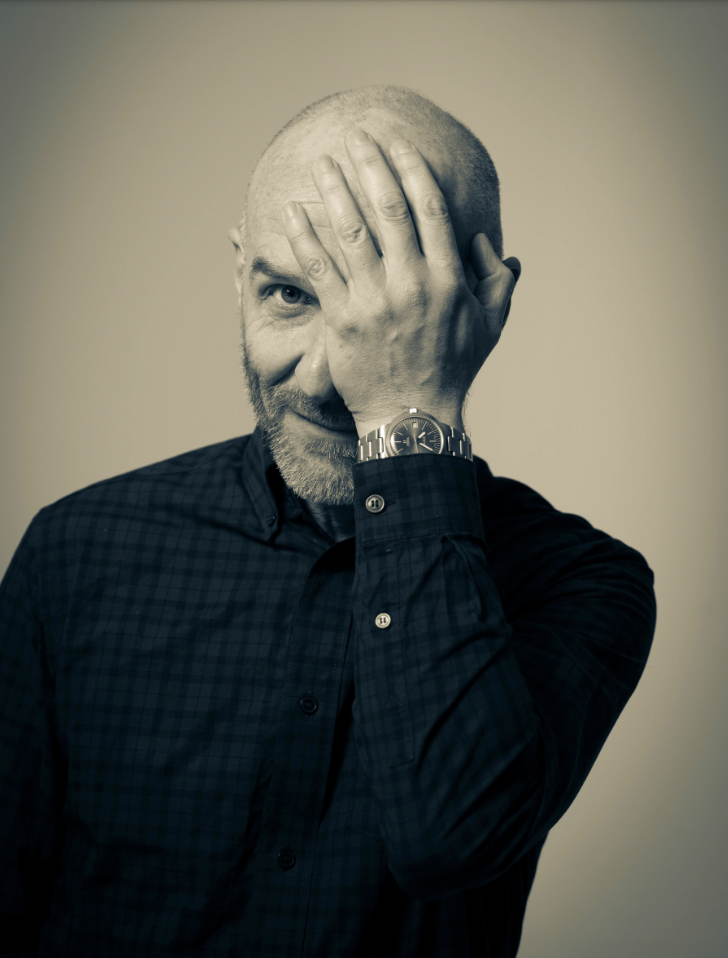 How did you get started in journalism and what titles have you written for over the years? I did some work experience at The Observer while studying for an NCTJ qualification, and had some pieces published in the paper. Once I qualified/graduated, I started working at What Hi-Fi? (thanks in no small part to Clare Newsome). After over 14 extremely enjoyable years I became a freelancer. Since then I have worked for pretty much any tech/audio/video title (both print and online) that will have me.
Why did you become a journalist?
I was fairly sure that writing was the only thing I was genuinely good at – and there’s no two ways about it, I enjoyed seeing my name on a byline. So a combination of aptitude and ego, basically.
What career highlight stands out to date? It could be someone you’ve met, a trip you’ve got to go on or a piece you’ve filed you’re particularly proud of!
I’ve been fortunate enough to travel all over the world during my career (admittedly it’s usually to see a factory rather than any sites of great historical interest, but still and all…), and I’ve enjoyed more seats in Business Class than I ever had a hope of paying for myself. I’ve met any number of profoundly interesting people on many different continents – and I’ve discovered that I am only prepared to participate in karaoke if I am a) three sheets to the wind and b) on the other side of the world.
What advice or tips would you give someone wanting to start out in the industry?
If you want to be a journalist, start writing and keep writing. Write about things that interest you, that you’re passionate about, and make sure you write something that you yourself would like to read. It’s no good trying to please ‘them’, because no one really knows what ‘they’ want – so write to please yourself. At some point you’ll find out if anyone else is pleased by your writing too.
What is a typical day for you as a journalist?
The most typical day involves a lot of interaction with couriers, a lot of listening to (or, less typically, watching) new equipment in order to decide what my review of it is going to say – obviously this will be done alongside a reference item for comparative purposes. Only slightly less typical is the day when I actually write the review. Tragically atypical are the days when I venture out of my house – usually to go to London to be shown new products and be bought drinks. And then there are the days when I have to be at an airport at some ungodly hour because I have to leave the country in order to be shown a new product and be bought drinks.
How do you think journalism has changed over the years?
I started in this industry almost 20 years ago, when print was still King and online publishing was the preserve of nerds and weirdos – obviously, that emphasis has changed more than somewhat. When I started in journalism, the word ‘clickbait’ didn’t really exist (*sighs nostalgically*). If I’m lucky, I’ll be able to quit when I choose to, rather than have AI make me an anachronism (*sighs anxiously*).
What do you expect for the future of print and journalism?
The appeal of print is, like that of Spinal Tap, becoming more selective. I can see print products becoming signifiers, expensive and lavishly premium status-symbols that let those around you know you’re a bit more discerning and cultured than to submit to the bombardment of online content (and that look good on your coffee table). Journalism, similarly, is going to end up in one of two distinct camps – the clickbait-y content-farm model that’s under immediate and profound threat from AI, and the in-depth, long-form and exploratory stuff that governments of every kind are terribly afraid of.
What do you think makes a good story?
A beginning, a middle, an end, and maybe a bit with a dog in it. Or, even better, a story that informs, educates and entertains. Best of all is the story that the reader had not the first clue about to begin with but that has become a subject of tremendous interest and/or concern to them by the end of it.
What do you think makes a great PR agency?
Passionate, well-informed people who know the difference between ordinary, good and great products and can temper their levels of enthusiasm accordingly. People who understand what a journalist requires when first being briefed about products or services, and can reliably provide it. And people who are prepared to acknowledge that their clients are not the only ones currently delivering a specific service or product type.
What are your dos and don’ts for PRs?
These are mostly covered in the ‘great PR agency’ section, to be honest. Do know the nuts and bolts of whatever you’re PR-ing, don’t assume that every single one of your client’s products is the greatest example of its type ever offered for sale. And I will offer this ‘don’t’ for no other reason that it’s happened to me too often: don’t let me listen to a product and then spend the next half an hour telling me how great it sounds. After all, I’ve just listened to it.
What has been your favourite press trip/press event?
I was fortunate enough to be taken to Hong Kong for four or five days a while ago – and on one of those days, there was nothing at all the agency or the brand expected from the assembled journalists. We had an entire day free to explore Hong Kong as we saw fit – it was almost like being on holiday. And I say this as someone who has friends and family who are convinced that I’m going on holiday every time I get on an aeroplane in order to be shown around a factory – there is no telling them, it seems, that I’m not just going somewhere to sit by the pool. So it was nice to have an actual little mid-trip holiday for once, especially somewhere as fascinating as Hong Kong.
What makes a tech brand/product stand out for you?
That a product should perform well and represent decent value for money is a given. Products that innovate are always exciting, if for no other reason than they are very rare. And brands that have a touch of humility and, even better, humanity about them are to be congratulated, because I can count the global entirety of them on the fingers of one hand.
If you weren’t a journalist what alternative career would you have chosen?
Something I am less good at and that is less interesting. Doesn’t bear thinking about, really.
Is there a big story you wish you could have written/broken?
Any story at all? The story about the phone-hacking scandal at News of the World that led to Rupert Murdoch getting custard-pie’d in front of a committee of MPs – that’s the dream, obviously. But of stories that concern the industry in which I work, I wish it had been me, rather the the genius that is Brian Merchant, who in 2010 alerted the world to the fact that conditions in Apple’s Longhua facility outside Shenzhen were so bad that assembly-line workers were committing suicide right there in the factory. That’s not a story that could have been written by AI.

