
We’re proud of the relationships we build with journalists across multiple sectors, achieving coverage for clients in places they might not initially consider. As an agency, Horse & Hound has been a long-time favourite read, especially for our founder, Vic, who is positively pony mad. Many of our brands have always looked stunning in the monthly ‘Beyond the yard’ country compilations, featuring the likes of Smeg, HJ Hall and Pantherella. So, when we started working with Ariat in 2018, we were excited to further develop our relationship with the magazine’s dressage, sports horse breeding and product editor, Polly Bryan, through our outreach for one of the world’s most highly renowned equestrian and country brands.
In our latest ‘meet the journalist’ blog, Polly discusses some seriously incredible career highlights and, like us, her long-term appreciation for Horse & Hound.

How did you get started in journalism and what titles have you written for over the years?
I’ve wanted to be a journalist pretty much as long as I can remember. When I was 14, I announced in a school careers session that I wanted to work for Horse & Hound one day – so that’s proof that dreams really can come true. I did an English Literature degree at university, followed by a diploma in magazine journalism. My first proper journalism job was on Polo Times magazine, where I worked for two years, before starting at H&H in August 2014.
Why did you become a journalist?
I love writing, and I love talking to people and hearing their stories. I’ve always been fascinated by other people, their experiences and what makes them tick. Of course, I also love horses and equestrian sport, so having a job where I get to interview some of the world’s best riders and tell their stories is brilliant.
What career highlight stands out to date? It could be someone you’ve met, a trip you’ve got to go on or a piece you’ve filed you’re particularly proud of!
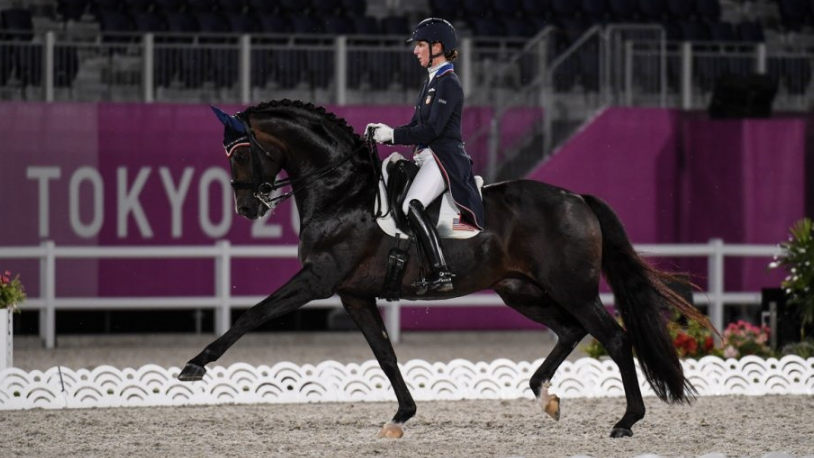
Covering the Tokyo Olympics in 2021 was an incredible experience. Reporting from an Olympic Games is the absolute pinnacle of any sports journalist’s career, and although I had covered the 2016 Paralympics in Rio – also amazing – I had never been to an Olympics. Of course, it was postponed in 2020, which was difficult, and the 2021 Games were strange and unique in many ways. But it also felt as though I was a small part of an event that would go down in history, and I felt so privileged to be there. Plus, the sport was incredible – we won so many medals across the equestrian disciplines, and the atmosphere was like nothing I’d experienced before. It was very hard work – often writing through the night to hit our print deadlines – but it was great to be able to create content that helped our readers feel as though they were right there themselves.
What is a typical day for you as a journalist?
It varies so much. I look after dressage, breeding and products content for H&H, both in print and online, so I might work on something within each of those areas in a single day. I might start the morning reading press releases and chatting with PRs about newly launched products, and compiling a product feature for the magazine, then move on to commissioning, editing and proofreading dressage reports. I find I concentrate best towards the end of the day, so I usually do longer interviews or get stuck into feature writing during the afternoons.
How do you think journalism has changed over the years?
Digital content has grown hugely, and I’ve had to develop my skills in that area ever since I started working as a journalist in 2012. Everything is much more fast-paced now, but it’s exciting, and with H&H being a weekly magazine, I’ve always been used to working rapidly and getting things turned around at speed.
What are your dos and don’ts for PRs?
Do – make it clear when pitching what the product actually is, and fast. Sometimes I must read several paragraphs of an email before I figure out exactly what it’s about, and why it might be relevant to my audience. If it’s not clear what you are pitching in the first few lines, most journalists won’t keep reading long enough to find out.
Don’t – get the name of the brand or publication wrong in a pitch. It happens more than you’d think…
If you weren’t a journalist, what alternative career would you have chosen?
I loved studying psychology for A levels, and I think I’d still want to do something in the world of sport, so perhaps I would have become a sports psychologist!?

